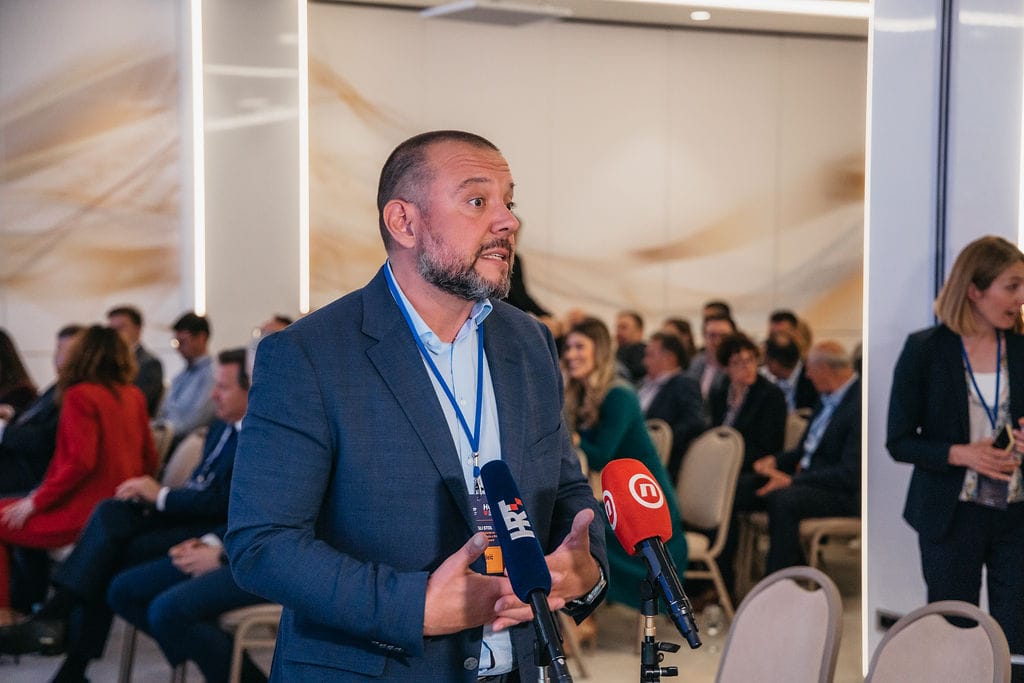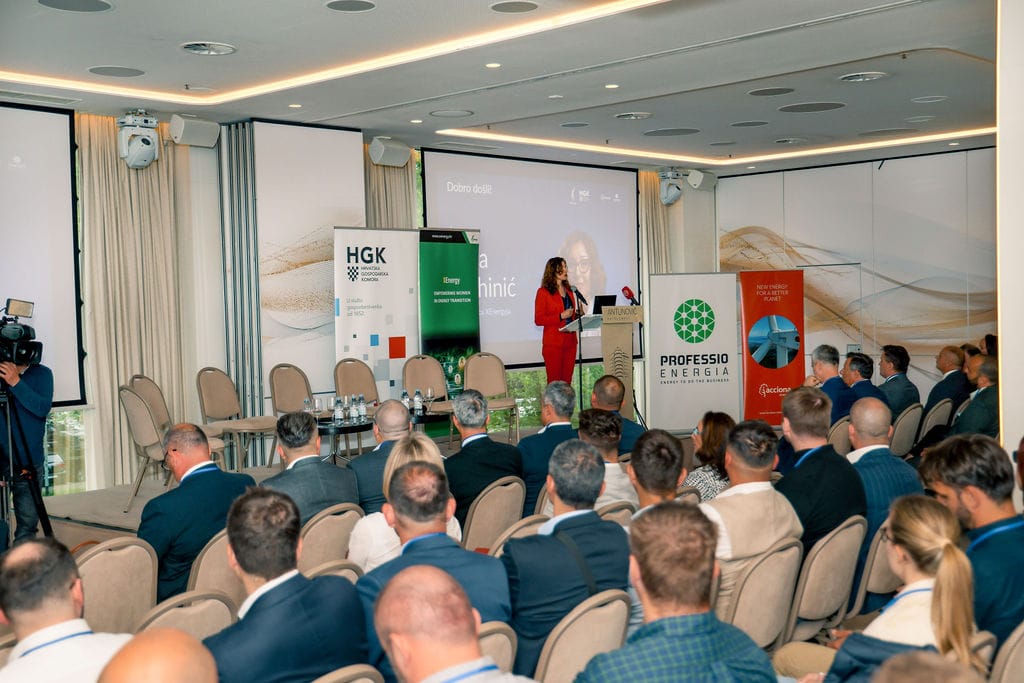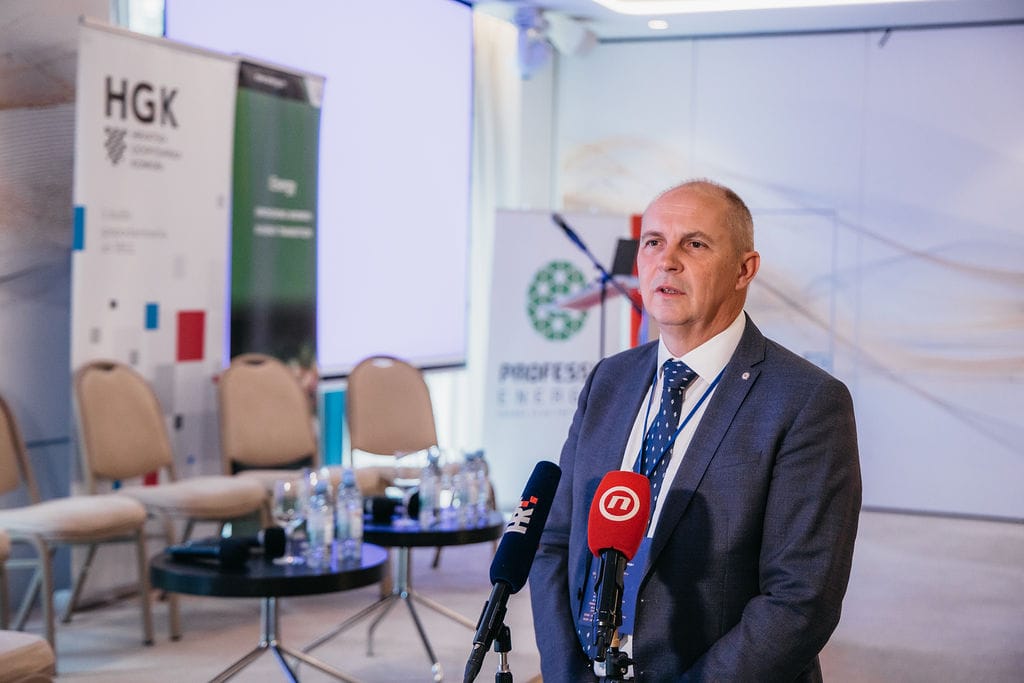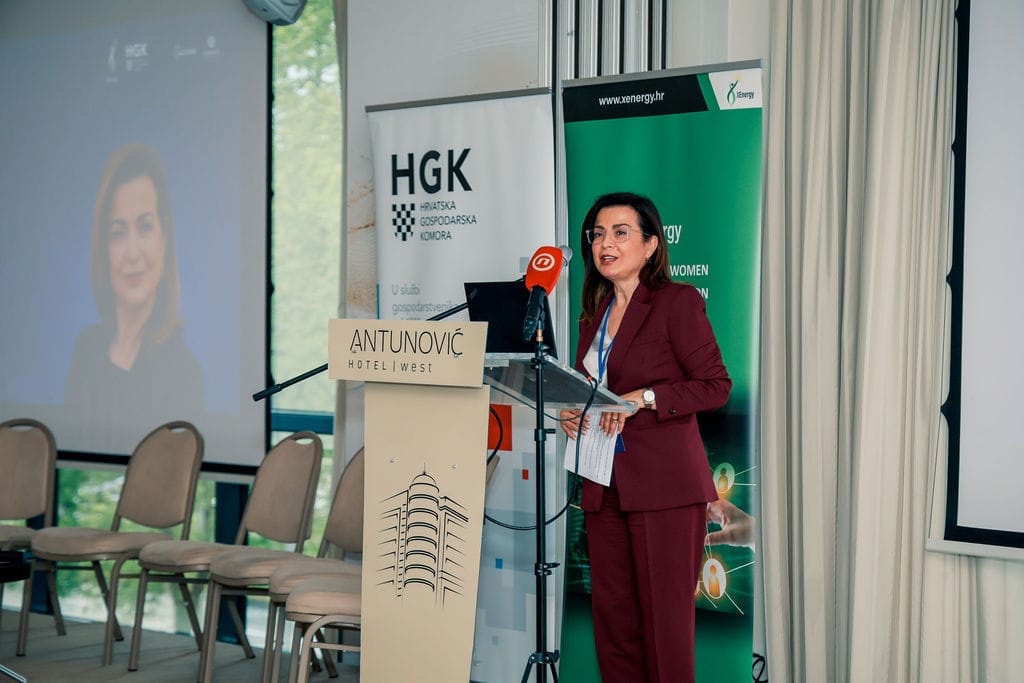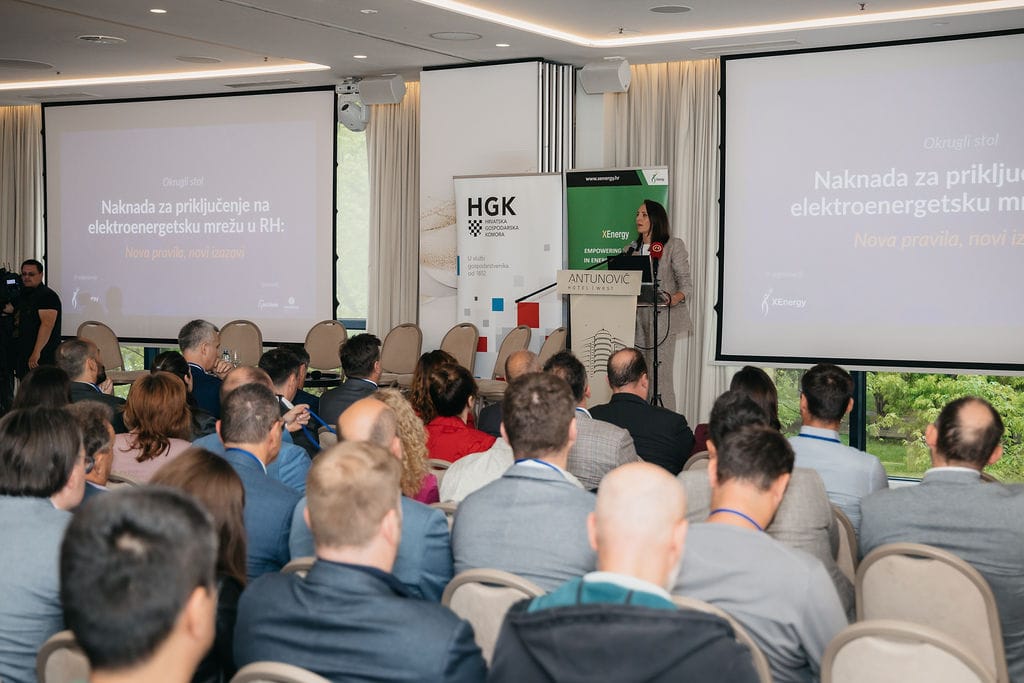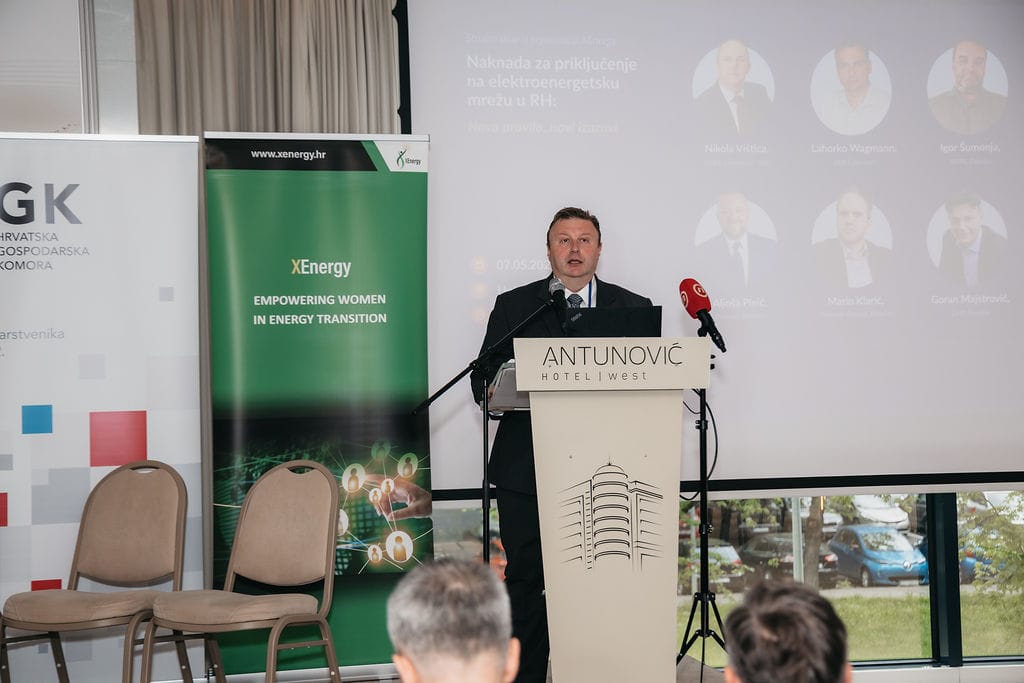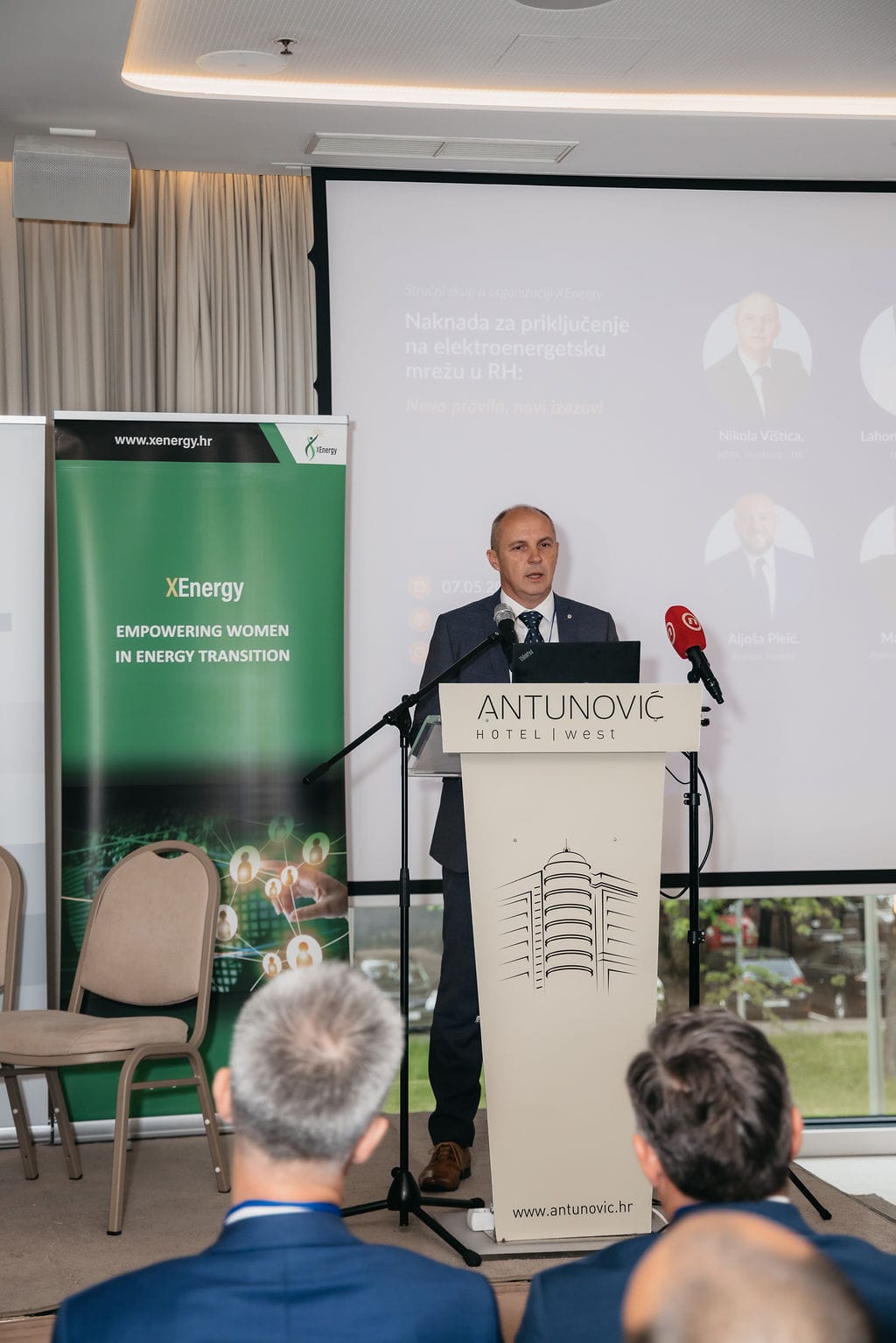
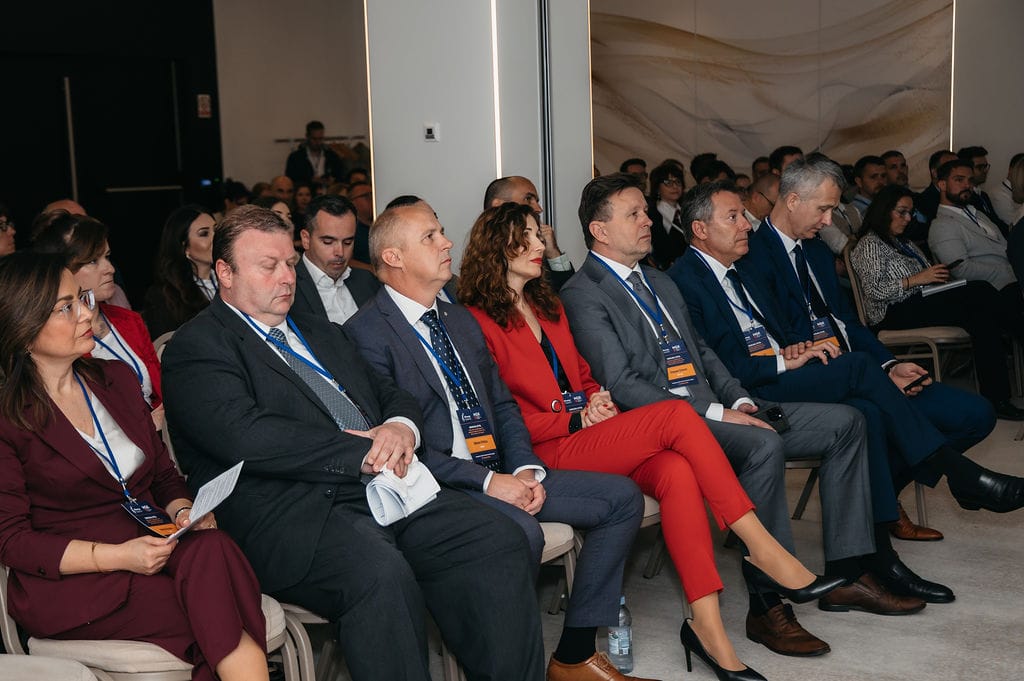
Just one week after the Croatian Energy Regulatory Agency (HERA) adopted the long-awaited decision on the unit connection fee for the electricity grid, the association XEnergy, in partnership with the Croatian Chamber of Economy (HGK), brought together key energy sector stakeholders at a roundtable discussion aimed at fostering an open and constructive dialogue on the new regulatory framework and its market implications.
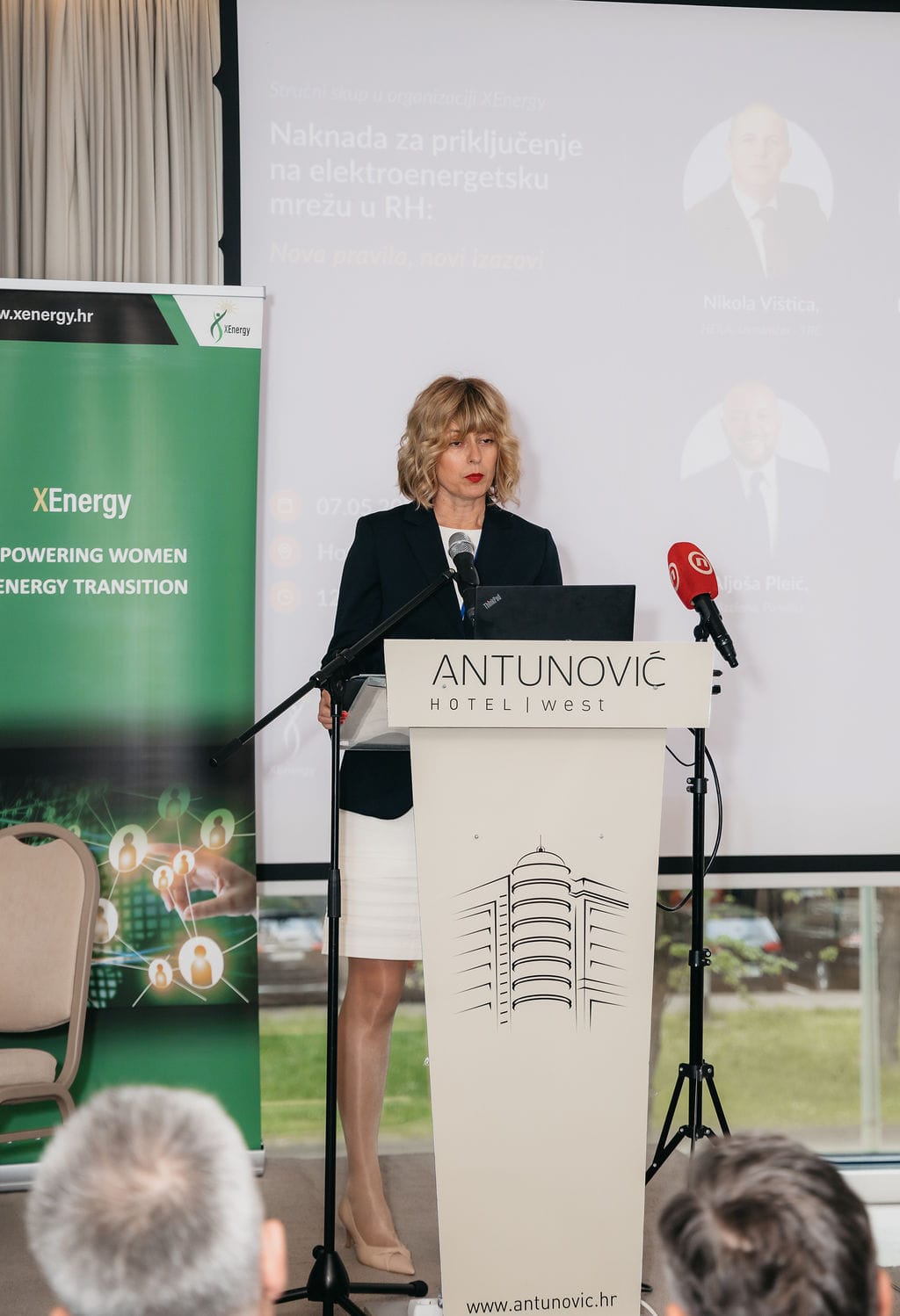
The event was opened by Nela Vlahinić, Nikola Vištica, and Marija Šćulac, after which Zlatko Zmijarević, Deputy President of HERA’s Management Board, presented HERA’s Methodology and connection fee framework.
Moderated by Minea Skok, President of the XEnergy Advisory Board, the panel discussion addressed numerous highly specific questions from a packed audience. Representing the regulator, participants heard from Lahorko Wagmann, while Igor Šumonja and Krešimir Ugarković explained the operators’ perspective. Aljoša Pleić and Mario Klarić spoke about the challenges faced by investors, while Goran Majstrović provided broader insight into regional grid development challenges.
We would like to thank HERA for its trust and support in organizing a professional conference on such a timely topic, as well as our corporate members and sponsors Acciona and Professio Energia. Special thanks also go to our moderator Minea Skok and all distinguished panelists for their highly professional insights into this complex topic.
As highlighted during the roundtable, Croatia currently has 1.2 times more RES projects (expressed in MW) in various stages of the grid connection process than were operational on the transmission and distribution network at the beginning of April. In response to the strong increase in interest for connecting renewable energy sources (RES) and to ensure the necessary development of the electricity grid, HERA was required to change its approach to financing the creation of technical grid conditions.
With HERA’s adoption of the Decision on the amount of the unit connection fee for the electricity grid, a new method for calculating connection fees came into force in Croatia on May 1st this year. Until the end of 2017, grid connections were regulated under rules based on the technical circumstances of that period. From 2018, a methodology based on actual costs was applied, particularly for producers connecting to the transmission grid. These costs included both the construction of the connection itself and most of the expenses related to creating technical conditions within the grid.
In practice, this approach created serious challenges. Connection fee calculations included the costs of major infrastructure projects, such as extra-high-voltage transmission lines, resulting in extremely high fees for certain projects. Consequently, transmission grid connection procedures slowed significantly and, in some cases, became completely blocked, creating major barriers to new investments. At the same time, the number of connection requests continued to grow rapidly, making it clear that grid development could no longer be planned through incremental cost calculations for each individual connection.
This was especially evident on the transmission network, which is highly interconnected from a technical perspective, making it impossible to simply and fairly allocate actual costs to a single user or investor. For these reasons, a new regulatory framework (methodology) based on a unit connection fee was introduced in 2022.
Under the new approach, part of the costs related to creating technical conditions, as well as grid revitalization, reinforcement, and development, are distributed among all new users proportionally to their connection capacity, effectively abandoning the previous so-called “deep connection approach.” In addition, energy storage facilities are exempt from paying charges related to the creation of technical grid conditions.
Although this model removes the locational signal, its advantage lies in the fact that investors know in advance how much the grid connection will cost them. This significantly reduces regulatory uncertainty and facilitates financial planning, while grid development is viewed as a shared interest of all users.
Managing connection procedures under conditions of strong demand for both RES projects and consumption growth, including EV charging stations, heat pumps, energy storage systems, industry, and data centers, is highly complex and there is no single universal solution. This is reflected in the different reforms and approaches adopted by various EU member states, as well as in legislative proposals currently under discussion at EU level through the European Grids Package.
Through the recent adoption of the connection fee decision under the valid 2022 methodology, along with other regulations such as the grid connection rules, the rights and obligations of all stakeholders have become more clearly defined, enabling a more transparent assessment of risks for network users (investors) and operators, under the supervision of HERA and the competent ministry.
The roundtable also addressed the frequently repeated public claim that applicants are paying the costs of creating technical grid conditions (TGC) while “receiving nothing in return.” The regulator (HERA) clarified that this interpretation is incorrect.
Under the applicable connection rules, applicants are allowed to connect before the full implementation of the TGC, but with temporary operational limitations on the use of connection capacity until the required grid investments are completed, as clearly defined in connection agreements. Under a different approach, projects would have had to wait until all grid upgrades were completed before being connected.